Departure lounge ramblings on music, places, climate change and stuff outdoors

Posts from the ‘Books’ category

Books

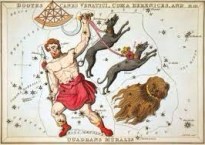
Hu Gadarn’s plough

The changing of the seasons on earth also marks a shift in the ascendancy in the skies, with Bootes taking over from Orion as the most prominent constellation in the heavens. In Welsh mythology, Bootes represents Hu Gadarn, the first farmer to use oxen to pull a plough. The moment at which Hu Gadarn, his yoke (the Roman constellation of Auriga), and ox (Taurus, the bull) first line up after sunset was a reminder to ancient Celts that it was time to plough the fields and sow seeds.

The Lost Rainforests of Britain

In the winter months I look for lichen. That habit, which I started because my binoculars are made temporarily redundant by reduced bird numbers on the uplands of the Bannau Brycheiniog during January, has developed new purpose since reading Guy Shrubsole’s magnificent ‘The Lost Rainforests of Britain’. Now I understand that the abundant varieties of these plant/fungi collaborations across the Welsh hills are not just distraction from the absence of something more exciting, but something incredible and historic in their own right – evidence of the last remaining fragments of the temperatre rainfrorests which once covered these isles.

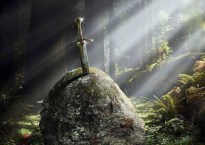
Transcendence, Excalibur and how Britons forgot how to make steel

I like to have at least a couple of books on the go at all times and two of my current crop – ‘Transcendence’ by Gaia Vince and Bernard Cornwell’s ‘Enemy of God’ – have provoked an unlikely fusion of ideas: was King Arthur’s unbreakable sword, Excalibur, a mythic expression of the lost art of Roman steel-making? Did Merlin wield ‘magic’ by exploiting the human brain’s ability to convert mental anticipation into physical reality?

Dylan Thomas Centre, Swansea

Swansea’s Dylan Thomas Centre pays fitting homage to the unique talent of Wales’ greatest writer. While the exhibition space is modest in comparison to the depth of Thomas’ literary contribution, it is so wonderfully curated, with Thomas’ sonorous voice regaling visitors with excerpts of his poems, letters and plays at every turn, that a full afternoon was necessary for our visit.

The last forest and the future of life on Earth

Part adventure travelogue, part popular science journalism, part conveyor of big truths, Ben Rawlence‘s The Treeline is a beautifully written, mind-opening account of how trees are migrating north in response to climate breakdown. It’s a page-turner and yet also book I lingered over, because there were so many passages that necessitated an intake of breath, followed by a solemn stare into the distance, and then a re-read to make sure I had fully understood the devastating implications of the new information just imbibed.

The Ministry for the Future

I approached The Ministry for the Future, eco sci-fi master, Kim Stanley Robinson’s latest book, with some trepidation. I was anticipating a grim imagining of a near future in which human civilisation descends into chaos as a result of failure to respond to the climate crisis, something I am generally trying to escape when I find time to pick up a novel. But while there is plenty that is frighteningly real in Robinson’s narrative – from millions dying in droughts, floods and fires, to the rise of global eco-terrorism as a generation realises that the one-percent really are willing to sacrifice their futures for short-term profit – ultimately ‘The Ministry of the Future’ is a manifesto of hope.

Sunshine over Goosegog Lane

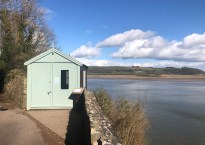
“To begin at the beginning” – there’s really no other way to start a blog about Laughrne, the small former cockle-fishing town on the Carmarthenshire coast which I visited this week to pay homage to its most famous son, Dylan Thomas.

Humankind: A Hopeful History

‘Humankind: A Hopeful History’, by the Dutch historian, Rutger Bregman, has given me philosophical reason for optimism in a bleak year, alongside reinforcing my view that neo-liberalism is the biggest threat to human prosperity, while challenging other deeply ingrained perspectives. In a highly compelling, research-based narrative, he demonstrates that the underpinning dogma of neo-liberalism is false: human beings are not “naturally” selfish and competitive. In fact, if you look at the historical evidence, the basis of our success has been collaboration.

Landmarks

Robert Macfarlane is the nature writer of choice in markontour’s household, and so reading Landmarks, Macfarlane’s linguistic exploration of landscape, has been a deliberately drawn out affair – a book that we have read out loud over several months in order to savour every word.

The Nanny State Made Me

If the COVID-19 crisis has taught us anything it is the life-saving difference between good and bad government, and why the foundation of a successful society is strong, well-funded and universal public services. This, of course, shouldn’t have needed reaffirming. As Stuart Maconie points out in ‘The Nanny State Made Me’, a book that is both wonderfully entertaining and annotate-every-page informative, “The people who complain about the ‘nanny state’ are the people who had nannies”. Nevertheless, in most parts of the western world the public sector has been on the receiving end of a forty year battering. Perhaps this pandemic will be the moment when it bounces back off the ropes.