Departure lounge ramblings on music, places, climate change and stuff outdoors

Posts from the ‘Places’ category

Cities and the interesting places within them

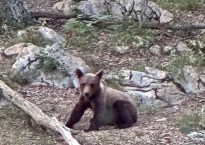
Brown bear country

Slovenia, where markontour was holidaying recently, has the distinction of being both one of the most materially equal societies in the world (a 2nd placed Gini coefficient of 0.24, which is incidentally the same score Britain enjoyed in 1979 prior to Thatcherism. The UK’s score of 0.34 now puts us outside the top 40), but also has enshrined the rights of nature in its constitution. The result is a country that is visibly thriving (although I am sure there are a thousand problems not visible to the casual tourists’ eye) and brimming with biodiversity.

Bees: A Story of Survival

I’m probably kidding myself, but I like to think I know a little bit about the birds after 5 years escaping to the Welsh countryside, but an uplifting visit to the Liverpool World Museum revealed that I didn’t even know what I didn’t know about the bees. Fortunately, from the fact that these industrious little creatures have survived since the time of the dinosaurs, to the highly endearing knowledge that they have a honey stomach, “Bees: A Story of Survival” had the answers. Sadly, unlike the Bass Museum of Brewing History (now much missed), where you used to get beer tokens to round off your visit, there was no honey at the end of the exhibition, but in all other ways it was a fact-filled, sweet delight.

Panda research base

Everyone knows the panda from the multitude of iconic images that this loveable-looking bear has inspired around the world. But surely there is nowhere where the panda’s image can be more ubiquitous than in Chengdu, an enormous city of 21 million residents in south-western China and home to the Chengdu Research Base of Giant Panda Breeding, which I was privileged to visit this week.

Fighters for Freedom

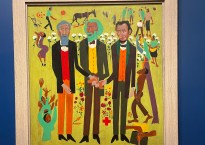
Robert H. Johnson’s ‘Three Great Abolitionists’ unites Abraham Lincoln, John Brown and Frederick Douglas in a hand-clasp that eluded these three leaders of the abolition of US slavery in their lifetimes. It is an arresting start to a rousing exhibition at the Smithsonian American Art Museum in Washington D.C. – all vibrant colours and stylised imagery in celebration of American freedom fighters, liberationists, emancipators, socialists, mostly people of colour.

Hu Gadarn’s plough

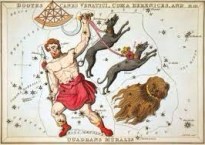
The changing of the seasons on earth also marks a shift in the ascendancy in the skies, with Bootes taking over from Orion as the most prominent constellation in the heavens. In Welsh mythology, Bootes represents Hu Gadarn, the first farmer to use oxen to pull a plough. The moment at which Hu Gadarn, his yoke (the Roman constellation of Auriga), and ox (Taurus, the bull) first line up after sunset was a reminder to ancient Celts that it was time to plough the fields and sow seeds.

Britta Marakatt-Labba’s Moving the Needle

Sami artist, Britta Marakatt-Labba, campaigns for environmental protection and indigenous rights in Norway through the medium of embroidered landscapes and maps of epic beauty and subtle detail. The two hours I spent viewing a large retrospective of her work – ‘Moving the Needle’ – at the Nasjonal Museet in Oslo last weekend counts as my most enjoyable 2 hours wait for a hotel check-in. Sometimes delay really does generate pleasure.

The Pennal Letter

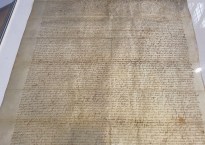
The inspiration for today’s blog is ‘The Pennal Letter’ – a double-A3 sized piece of parchment, penned in Latin in March 1406 by Welsh hero, Owain Glyndwr, and addressed to Charles VI, King of France. Last weekend I spent a thoroughly enjoyable afternoon viewing a replica of the manuscript in the Canolfan Owain Glyndwr, and then following a trail around Machyllneth and beyond which charts the 10 year period when Glyndwr threw off English colonial shackles and briefly established Wales as an independent nation. (Nb there is an accompanying podcast for this blog).

Federico Garcia Lorca and the duende

Despite part-inspiring one of my favourite Clash songs, ‘Spanish Bombs’, until visiting Andulucia this summer I knew nothing about the legendary Spanish poet and playwright, Federica Garcia Lorca, other than the intriguing reference in Joe Strummer’s lyric: “Oh please leave the ventana open / Federico Garcia Lorca is dead and gone”. Today in the small tourist village of Pampaneira, a dense huddle of whitewashed stone houses cramped onto impossibly steep terraces on the southern edge of an escarpment of the Sierra Nevada, I was intrigued again by Lorca – this time generating enough impetus to read up a bit.

Barcelona

This is going to need some fleshing out on subsequent visits, but getting back to the original roots of markontour.com, here are fragmentary reflections on Barcleona, from three days working there and one day of leisure.

The thorn bush is the mother of the oak

Ms Markontour and I have been enjoying a blissful bank holiday weekend at Knepp Wildland Safari in southern England. We’ve been wanting to visit since reading Isabella Tree’s ‘Wilding’ a few years ago – an account of how she and her husband, Charlie Burrell, decided to see what happened if nature was permitted to manage itself on their 3,000 acre loss-making farm. The result is the most exhilarating nature site in Britain. A place that echoes all day and night to bird-song, has welcomed back multiple species that were on the brink of extinction in Britain from the Turtle Dove to the Nightingale, and where bramble and scrub have proven to be the catalyst for abundance, variety and beauty, rather than a nuisance to be cleared away. I could have happily stayed forever.

O What A Beautiful Mornin’

The Museum of Broadway made for educative departure-day lunch break after a busy week in New York. Charting the genesis of the world’s most famous theatre district, on what an opening frame recognises as Lenape land, the museum takes the visitor on a chronological entertainment journey filled with song, costume and, less expectedly, mirrors.

Dylan Thomas Centre, Swansea

Swansea’s Dylan Thomas Centre pays fitting homage to the unique talent of Wales’ greatest writer. While the exhibition space is modest in comparison to the depth of Thomas’ literary contribution, it is so wonderfully curated, with Thomas’ sonorous voice regaling visitors with excerpts of his poems, letters and plays at every turn, that a full afternoon was necessary for our visit.

The Cranes Return

Cranes, large white wetland birds, standing 1.3 metres tall with flamboyant tail-feathers that bob about as they graze, were hunted to extinction in Britain four hundred years ago. But last weekend we went to visit a now thriving resident population at the Slimbridge Wetland Centre on the Severn Estuary near Bristol. It was a magical and uplifting experience, and it turned out that the Cranes shared the billing with an astonishing cast of other beautiful wildfowl.

On the trail of the standing stones

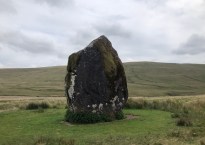
Five thousand years ago the people living in what is now the Brecon Beacons National Park, the area of Wales where markontour currently resides, were into megaliths, big time. This much we know because over thirty of them survive to this day, still marking out the valley roads and high passes in this lush, undulating landscape. They are extraordinary things to get out and see in situ, stubbornly remaining on the spot they have inhabited through so many human generations, and in many cases accessible enough to be able to get right up close and touch.

Sunshine over Goosegog Lane

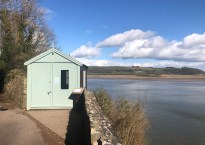
“To begin at the beginning” – there’s really no other way to start a blog about Laughrne, the small former cockle-fishing town on the Carmarthenshire coast which I visited this week to pay homage to its most famous son, Dylan Thomas.

Dewi Sant was a vegetarian Glastonbury fan

Some might question why an atheistic internationalist has chosen to write a blog about a day of national religious celebration, but St David (Dewi Sant in the Welsh) was a vegetarian who spent some time at Glastonbury and established his first hermitage in Llanthony, a few miles down the road from where I sit writing this blog. Moreover, it’s an excuse to make use of my shelf of Welsh history books and then pretend I know something about it.

Stargazing in Hollywood

I have long intended to start a blog site dedicated to reviews of planetariums and observatories. It would have been even more niche than markontour’s usual output, so perhaps it’s just as well it never happened. But if I were to start such a stargazers blog, the Griffith Observatory and park in Los Angeles, which I visited this weekend, would have to be the first entry.

Gazing on the cosmic plughole

I wonder if Brandon Yoshizawa knew that the exhaust plume of a Falcon 9 rocket would take on the shape of a flower as its hot discharge made contact with colder air of the upper atmosphere? He was certainly in the right place at the right time and with the requisite skill to capture an extraordinary image. The result, Flower Power, is a perfect example of the blend of art and science that makes the annual Astronomy Photographer of the Year exhibition at the Greenwich National Maritime Museum so special. 

London’s still calling forty years on

In a vital and captivating free new exhibition the Museum of London is celebrating forty-years since the release of London Calling by The Clash. It’s an album that is both precisely of its time and yet timeless, a spirit that the curators (working with the surviving members of the band) have managed to capture perfectly. Markontour has visited twice already in its first week and I’m sure I will be back a few more times before it closes in April.

Becoming the Forest

On the top floor of a Tudor hunting lodge at the edge of Epping Forest, something both strange and enlightening happened this weekend. “On All Hallows Eve, when the veil between the living and dead is at its thinnest” Becoming the Forest, and installation by Norwegian artist, Una Hamilton Helle, invited visitors to “take part in an audio journey celebrating the oncoming winter, populated by the voices of forest dwellers past and present, including the trees themselves.”

Colours of the hills and fields in Hamburg

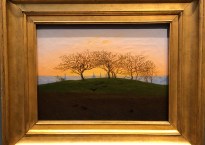
I have become a regular visitor to Hamburg this year, as it is a convenient stopping off point on the train journey from London through to Copenhagen, Stockholm and Oslo, where work takes me frequently. Usually I arrive late and leave early, but recently I discovered what I had been missing, after an early doors trip to the Hamburger Kuntshalle gallery. Most exciting were the landscapes of Caspar Friederich, an artist I had never previously encountered, but whose ‘Hill and Ploughed Field Near Dresden’ now lights up my soul every time I turn on my iPad.

Smoke and mirrors

I was briefly into performing magic as a kid, inspired by Paul Daniels on the telly if truth be told. A visit to the Wellcome Collection’s fascinating new exhibition, ‘Smoke and Mirrors – The Psychology of Magic’, has re-ignited my interest and reminded me just how malleable the human mind can be.

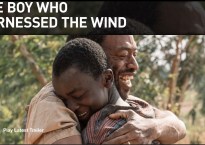
The Boy Who Harnessed The Wind

“Overcoming poverty is not an act of charity, it is an act of justice”, said Nelson Mandela, in a quote that closes ‘Mandela: The Official Exhibition” on London’s southbank. He went on to explain how poverty can be overcome: “Like slavery and apartheid, poverty is not natural, it is man-made and it can be eradicated by the actions of human beings”.

Sunshine on Mynydd Llangorse

Yesterday morning I was out with the dawn in order to catch the sun rising over the snow covered hills that surround our new Welsh home. At the peak of Mynnd Langorse a couple of hours later I met a man called Steve, who had fulfilled a thirty-year ambition to move here after first becoming enchanted with these Welsh hills after spending time in the valleys in 1984 as part of Lesbian and Gays Support the Miners (an uplifting experience that was so brilliantly portrayed in the film ‘Pride’).

Today I awoke to a frost hollow

Earlier this week I awoke to see a field of lost clouds, a huge bank of them, gently swirling in the valley beyond our front window, separated from their brethren who were floating in their rightful places in the sky above the Welsh hills.

The Devil’s Arse

Just above the Peak District village of Castleton there lurks a very large cave. So large, in fact, that it would take several days of crawling in the dark if one were foolhardy enough to try and traverse its entire thirteen mile extent. Those, like markontour, who regard such exploits as very much for other people to enjoy, can nevertheless experience some of the beauty of the caves from the relative safety of an entrance known as The Devil’s Arse.

Save Lea Marshes

The Leyton Marshes, part of the Lea Valley which flows down from the Chiltern Hills all the way through London to disgorge into the Thames near Poplar, is a rare haven for wildlife and tranquility in the great metropolis in which markontour lives. Indeed, the beauty of the Lea Valley’s parks, canal and marshes is the main reason we moved to Walthamstow fifteen years ago. Yet now it is threatened by a badly conceived development put forward by the very authority that was created to protect it. It has to be stopped.

Size and the Big Apple

I love New York and visit regularly, but there are many things I still don’t understand about the Big Apple/Big Oyster, and size is one of them. Yesterday I was wedged in so tight between two ample sized pairs of buttocks on either side of me on the subway that I almost missed my stop, so difficult was it to extract myself. In the end one of my fellow passengers had to give me a push.

Ottawa’s Grand Hall

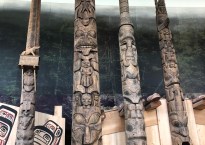
I was in Ottawa for just under 24 hours, but it made a great impression, particularly the Canadian Museum of History. The quality of First Nation artwork on display is extraordinary, utilising vibrant colour and strongly tied to nature infused with human imagination. Thus, adorning totem poles are variously Thunderbirds, Lightning Snakes, and even Supernatural Codfish. And while the totems were statements of power and, thus, perhaps it is not surprising that they were made ornate, echoing the philosophy of British nineteenth century designer, William Morris, practical function appears not to have been an obstacle to imbuing even the most commonplace objects with beauty. The head-baskets used daily to carry crops are designed with grace, and clubs used to stun seals and fish are shaped and decorated in homage to the fellow animals they are designed to kill. A jet-black, jewel encrusted bowl on display is one of the most beautiful objects I have ever seen.

Big Pit

Over 300 million years have passed since coal seams were laid down in the valleys from where I write this blog, when Wales sat astride the Earth’s equator and plants ruled the planet. The Big Pit National Coal Museum’s focuses on the last two hundred of those years and the ferocious drive of homo sapiens to dig out and burn this bounty of the Carboniferous. It is a tale of exploitation and degradation, but also of pride and ingenuity.
The Lonely Shepherd

Standing tall and bereft on an escarpment near Llangattock, the Lonely Shepherd has endured many centuries of regret. Below his spike of limestone, fields fed by Welsh rain sparkle in the post-thunderstorm sunshine, their emerald splendour liberally flecked with pure white Hawthorn blossom. It’s not a bad place to face an eternity of penance, nor indeed to pause midway on a May bank-holiday walk.

Curiosity killed the Kite

Yesterdsay Ms Markontour and I caused a tail-back on the route down Mynydd Llangyndir, bringing our bikes to a halt in the middle of the road to stand awestruck as a majestic Red Kite circled directly overhead. It was a great display, but it turns out that the kite’s desire to check out all and any movement on the ground was almost its undoing. These massive birds, with their black and white wings and unmistakable orange/red breasts made themselves easy prey for farmers armed with guns, and there was only one breeding female left in Britain in my lifetime.

Fatberg!

It feels slightly odd to be voluntarily spending a Saturday morning going to see the remnants of a 130 tonne, 250 metre long fatberg, but it is the Museum of London’s new star attraction and I fancied a bit of local tourism. 

The Great British Seaside

International readers of this blog may already be sneering at the concept of the ‘The Great British Seaside’, but as the Greenwich National Maritime Museum’s nostalgic exhibition shows, there’s plenty that’s wonderful and interesting about a British beach – it just rarely includes sunshine.

Addressing an accolade deficit – mills, peace & community radio in Bradford

Bradford, a northern English boomtown in the industrial revolution, has suffered a two century accolade deficit. Very few outsiders have ever had anything good to say about the place and yet on a recent visit markontour discovered fascinating history, great bars, a unique peace museum, thriving community radio and, above all, huge energy and optimism. Thus follows a very partial markontour guide to Bradford.

South By South West

Austin lives up to its own billing as the live music capital of the world. Admittedly, markontour was visiting during the legendary South By South West (SXSW) tech/film/music festival, but you can only make judgements based on available data. On this basis Sixth Street is a gig-goers dream, where every bar and almost every restaurant has constant live bands from 4pm until past the midnight hour. If the evidence that I am alive wasn’t so overwhelming, a few nights in Austin might have convinced me that I had died and gone to heaven (putting to one side the anthropocene nightmare that is urban American traffic).

Take a risk, it’s the most Edmonton thing you can do

I have to be honest, I had low expectations of Edmonton, a sprawling, million-plus city in oil-rich Alberta, Canada. But a week there was full of surprises, from great record shops, a fantastic gallery, incisive improv-comedy, tasty vegetarian restaurants, an introduction to ice-hockey, and guitar rental, all the way through to ultra-friendly people. I almost don’t mind not seeing the promised Northern Lights. Here follows the markontour guide to Edmonton.

Songs for Pythagoras & Undaunted Women

Peter Von Tiesenhausen is an ecologically-minded artist, who salvages to create. His extraordinary ‘Relief’ – a mountain-scape sculpted from the clapperboards of an abandoned community hall – conveys beauty and sadness in equal quantities and is going to stay in my mind for a long time. As will the Art Gallery of Alberta’s retrospective exhibition ‘Undaunted: Canadian Women Painters of the 19th Century”. Who knew there was such a great gallery in Edmonton!

Tredegar House

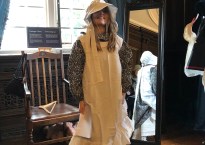
Tredegar House in Newport is where the National Trust are experimenting with allowing visitors to touch and feel history, rather than pointing from behind a rope. As it stands, I would wager that Tredegar House is the only place in Britain where in a single morning one can be tutored in the art of brushing up a top-hat, put on a shadow puppet show, study Elizabethan art, dress up as 1920’s housemaid, enjoy Elizabethan portraiture and sit down to dinner with a Russian princess.

Dropping in on Dr Johnson of Lichfield

I do love a good dictionary and Dr Johnson remains the master of the genre, three hundred years after he compiled his first such tome. This is why markontour and friends took a short detour to Lichfield on our long drive back to London from the English Lake District, for it was in this little Staffordshire city that Samuel Johnson was born in 1709 and his childhood home has be turned into a lovely museum and bookshop.

Once a town, now a city

Once a town, now a city, Newport is where markontour’s parents were born and bred. They fell in love in the sixth form of Newport Grammar and fifty-six years later the three of us plus Mum’s older brother, my Uncle Malcolm, undertook a pre-Xmas tour of the haunts of their youth. Along the way I learned a thing or two about the Newport Uprising of 1839, how the snow fell so deep in 1947 that schools were closed for three blissful months, how the New Year was celebrated in the 1950s, and what constitutes a dingle.

Sunlight on the Welsh Dragon

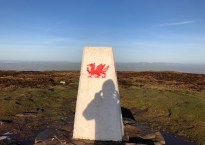
Markontour is taking a week away from the office to read, think and plan, stimulated by early morning hikes in the Brecon Beacons, and book-ended by late evening blogging. Today’s inspiration comes from a cracking walk up Hay Bluff to see the red dragon cairn (above) that proudly marks the summit. To the east lies England, to the west is Wales. The dragon watches in all directions.

A hat restored

Thanks to the wonderful woman at Worth & Worth hatters, New York City, who restored my favourite pork-pie hat to full glory, after it was defiled by an airport security machine at Heathrow!

John Kemp Starley and the two wheeled revolution

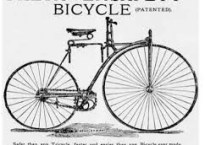
The ever-wonderful Vestry House Museum is currently showing a great little exhibition about the development of the modern bicycle and the Walthamstow man who invented it. As Walthamstow successfully experiments with mini-Hollands – neighbourhoods designed for pedestrians and cyclists – it’s fantastic to know that the bike itself has its roots in E17.

The laughing GP

Yesterday I visited my local doctor (General Practitioner, or GP, in the British vernacular) about a hypochondria based toe-injury, and got a lesson in psychological medicine.

The Booth of Truth

Last weekend I made my first ever record – an improbable mash-up of Dylan Thomas and Steve Earle – recorded straight to vinyl via a 1950s BBC-issue ‘Record Lathe’. This means, of course, that all markontour’s dreams have now come true and I didn’t even need to leave my own neighbourhood to achieve them, courtesy of the wonderful people at 42 Pearl Road and the E17 Art Trail.

Toronto

Toronto is one of my favourite cities, with its beautiful lake, vibrant music scene, laid-back attitude (for a big city) and ultra-friendly people. I visited four or…

Melbourne – city of music

Melbourne is a music town and thus makes markontour feel very much at home. In particular, I love Brunswick, Melbourne’s Dalston/Greenpoint; I love its vibrant community radio; I love the free tramway service in the centre of town; I was surprised to find Theakston’s Old Peculiar costs $16 a pint. Most of all I love the chance to catch up with old friends from Nottingham days and that’s probably why there’s an even higher than usual markontour quota of references to bars and record shops in this very incomplete city guide!

Artists and Empire

The best bit of the Tate Britain’s compelling ‘Artists and Empire’ exhibition comes right at the end, in the ‘Legacies of Empire’ room. Here, Hew Locke’s clever guerilla art sees him adorn a statue of Bristol’s founding father, Edward Colston, in cheap plastic gold trinkets, a modern equivalent of the tat that imperial traders exchanged for slaves. For, as Locke explains in an accompanying Restoration, Colston and Bristol’s wealth was built on human trafficking.

Sydney

Looking down on Sydney from one of its many skyscrapers, what is most striking is the sheer extent of the harbour. It seems to twist and turn forever in an endless melee of coves and bays. Having checked it out on Wikipedia, I note it is indeed “the world’s largest natural harbour”.

Auckland – a city in a forest

The visionary Mayor of Auckland has taken to describing his domain as “a city in a forest”. It’s a lovely idea and from what markontour saw on a brief work visit it is not far off being realised. So while Auckland has its challenges, particularly constraining the urban sprawl that comes from the New Zealand dream of a single-storey house and half an acre for everyone, the great attraction of this growing city is its proximity to the natural world beyond.

The Museum of Tomorrow

Sited on an archipelago in the port district of Rio de Janeiro, on approach the Museum of Tomorrow looks like some kind of spaceship, perhaps an inter-galactic freighter. Once inside and looking out, however, the feeling is of being in the belly of a whale, its huge skeletal frame exposed to the burning sun. It is an extraordinary structure housing a truly unique museum, that invites the visitor to ponder human existence in way that is progressively profound, disturbing, and uplifting.

West Africa: Word, Symbol, Song

The British Library’s ‘West Africa: Word, Symbol, Song’ is an engrossing and rewarding introduction to this vast region of 340 million people, 1,000 languages and 17 nations. Despite loving the music of Fela Kuti, Toumani Diabate, and Ali Fark Toure, markontour had hitherto failed to understand the regional and cultural connections between these great artists. This exhibition shows how their West African homelands share a love of story-telling, of which these great artists are simply modern expressions.

Cromford – birthplace of the factory system

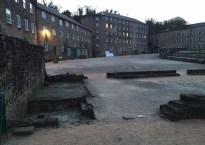
There are three good reasons to visit Cromford in Derbyshire. First, Richard Arkwright’s cotton mills on the edge of the hamlet were the birthplace of the factory system. Second, the nearby John Smedley shop, itself a survivor from the late eighteenth century, sells the finest woollen and cotton pullovers in the world. Third, the Scarthin bookshop boasts a cafe hidden behind a revolving bookshelf. Finally, my old history professor has edited a cracking volume of essays about Cromford’s role in the Industrial Revolution.

Cosmonauts

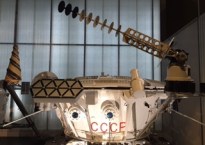
Despite having no aptitude for science, I have been fascinated by space travel and the stars since I was a teenager. So I had to borrow a friend’s son for an excuse to visit the Science Museum’s nostalgic tribute to the Soviet space programme – Cosmonauts.

Celts: art and identity

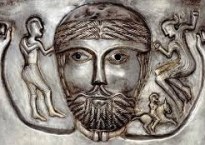
It turns out that the ancient Greeks coined the label Keltoi to categorise non-Mediterranean Europeans. Plato and his intellectual mates regarded the Keltoi as war-mad alcoholics with a penchant for fancy jewellery. But as the British Museum’s exhibition shows, the Celts were far from shallow. The Greeks might have corneed the early market in naturalistic art, but the Celts were already well into abstractionism 2,500 years ago.

Sorry! The lifestyle you ordered is currently out of stock

It’s E17 Art Trail time again, the annual community-led arts programme where the good people of Walthamstow turn their homes, shops and pubs into temporary art galleries. This weekend we only had time to sample of a few of the highlights in the Village, but the Art Trail runs until 14 June so there’s a bit of time to explore more. Here follows markontour’s highlights written, in keeping with the departure lounge ethos of this blog, on a train to Stoke for a Sunday of boating.

Salvador, Brazil

Salvador on Brazil’s north-eastern coast was the first capital of Portugal’s new colony in the sixteenth century, until it surrendered that privilege to Rio de Janeiro in 1763 (it wasn’t until 1960 that the plans to build a new capital in the centre of the country, Brasilia, came to fruition). But if this was once the entry point for European culture (and guns, germs and steel) into Brazil, today it is Salvador’s African heritage, a product of three hundred years as a major slave port, that gives the city its distinctive flavour.

Paris

Paris is likely to end up as markontour’s most visited metropolis of 2015, although I suspect the city has won greater accolades. I just wish I had more time to explore on my regular work trips, not least because there must be more museums per square mile in central Paris than anywhere else on Earth. Let’s call this Paris guide work in progress and I look forward to further investigation.

Rio – city of music, beaches and vegan restaurants (honest)

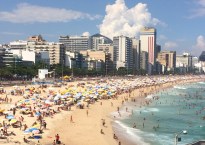
Rio, which has become one of my adopted homes for four or five weeks of the year, is quite simply the most beautiful city I have every visited. Undoubtedly it has many problems, but a walk along the Copacobana as the morning sun is rising is enough to make you forget about anything bad. From the crashing waves, to the vista of rocky mountain outcrops port and sideboard, and rain-forest behind, Rio is a reminder that it is possible for nature and urbanism to live happily side by side.

The Golden Valley

I have been visiting the Golden Valley, a sliver of countryside beauty astride the Welsh/English border, for over twenty five years, mostly to stay at the beautiful parental home of one of my closest friends. It has become one of my favourite places on Earth and so I am breaking the markontour mould of departure lounge ramblings to send this despatch from the relaxed idyll of Vowchurch in Herefordshire.

Buenos Aires

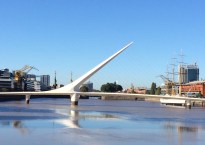
Buenos Aires is beautiful city of green spaces and white, colonial buildings and, while I can only draw on a couple of days worth of evidence, it is clearly a place to have fun. Here follows the initial markontour guide, hopefully to be substantially updated at some point:

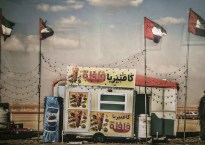
Abu Dhabi

Abu Dhabi is not really my kind of town – I like cities made for people, not cars. But after two visits I will concede that…

Broadstairs

I had no particular expectations of Broadstairs, visiting only to be with friends for the New Year, but it turns out to be a rather nice…

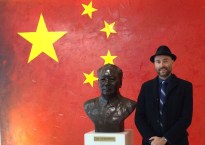
Beijing

My asthma-addled lungs don’t react too well to Beijing’s extreme air pollution, so it’s not on my tourist list. But as this is where the twenty…

Tangled Yarns

The William Morris Gallery has done it again, with another great guest exhibition. This time Alke Schmidt’s Tangled Yarns has taken over the space at the…

Walthamstow

Somehow, in eighteen months of blogging about my favourite things I have managed to omit Walthamstow. In my defence, there didn’t seem to be much of…

Contemporary Nottingham

An Easter weekend glide through Nottingham on our narrowboat to catch up with close friends who recently moved back here, has reminded me how much I like the city where I went to university and where my football team continues to inflict pain on its loyal fans.

Souk Secrets

Marrakech is one of those places that has probably always been a market town. Certainly I learned enough on this trip to know that it has…

The Museum of London

I have a rule of always visiting the city museum everywhere I go, as a way of gaining an understanding of a new place, and so I spent a lot of time in the Museum of London when I first moved to the Big Smoke. Thus, below is the first entry in what I intend will be a gallery by gallery guide to my favourite bits of said museum of my favourite city.

Yr Wyddfa

Snowdonia is without doubt my favourite holiday destination and not just because Cyrmu is the Watts family’s motherland. The Scottish highlands are bigger but Welsh mountain…

Cape Town

Just about every South African I know has told me Cape Town is the place to go, so I had been looking forward to last week's…

Spring has sprung

British Sea Power provided the soundtrack to the weekend, with ‘Spring Has Sprung’ proving the perfect accompaniment to the first t-shirt-weather day of the year. It got its first play while I woke the off-road bikes from their winter slumber, and the joyous refrain “birdsong sings in the atmosphere; spring has sprung out of nothing” kept popping back into my head throughout the day as Liz and I followed the River Lea from our home in Walthamstow down to the Thames at Limehouse.