Departure lounge ramblings on music, places, climate change and stuff outdoors

Posts from the ‘Books’ category

Books

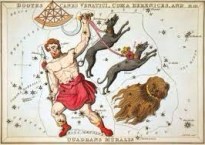
Hu Gadarn’s plough

The changing of the seasons on earth also marks a shift in the ascendancy in the skies, with Bootes taking over from Orion as the most prominent constellation in the heavens. In Welsh mythology, Bootes represents Hu Gadarn, the first farmer to use oxen to pull a plough. The moment at which Hu Gadarn, his yoke (the Roman constellation of Auriga), and ox (Taurus, the bull) first line up after sunset was a reminder to ancient Celts that it was time to plough the fields and sow seeds.

The Lost Rainforests of Britain

In the winter months I look for lichen. That habit, which I started because my binoculars are made temporarily redundant by reduced bird numbers on the uplands of the Bannau Brycheiniog during January, has developed new purpose since reading Guy Shrubsole’s magnificent ‘The Lost Rainforests of Britain’. Now I understand that the abundant varieties of these plant/fungi collaborations across the Welsh hills are not just distraction from the absence of something more exciting, but something incredible and historic in their own right – evidence of the last remaining fragments of the temperatre rainfrorests which once covered these isles.

Transcendence, Excalibur and how Britons forgot how to make steel

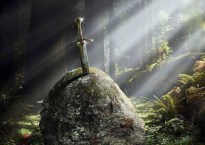
I like to have at least a couple of books on the go at all times and two of my current crop – ‘Transcendence’ by Gaia Vince and Bernard Cornwell’s ‘Enemy of God’ – have provoked an unlikely fusion of ideas: was King Arthur’s unbreakable sword, Excalibur, a mythic expression of the lost art of Roman steel-making? Did Merlin wield ‘magic’ by exploiting the human brain’s ability to convert mental anticipation into physical reality?

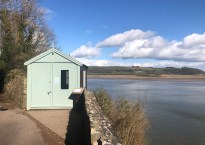
Dylan Thomas Centre, Swansea

Swansea’s Dylan Thomas Centre pays fitting homage to the unique talent of Wales’ greatest writer. While the exhibition space is modest in comparison to the depth of Thomas’ literary contribution, it is so wonderfully curated, with Thomas’ sonorous voice regaling visitors with excerpts of his poems, letters and plays at every turn, that a full afternoon was necessary for our visit.

The last forest and the future of life on Earth

Part adventure travelogue, part popular science journalism, part conveyor of big truths, Ben Rawlence‘s The Treeline is a beautifully written, mind-opening account of how trees are migrating north in response to climate breakdown. It’s a page-turner and yet also book I lingered over, because there were so many passages that necessitated an intake of breath, followed by a solemn stare into the distance, and then a re-read to make sure I had fully understood the devastating implications of the new information just imbibed.

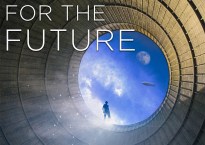
The Ministry for the Future

I approached The Ministry for the Future, eco sci-fi master, Kim Stanley Robinson’s latest book, with some trepidation. I was anticipating a grim imagining of a near future in which human civilisation descends into chaos as a result of failure to respond to the climate crisis, something I am generally trying to escape when I find time to pick up a novel. But while there is plenty that is frighteningly real in Robinson’s narrative – from millions dying in droughts, floods and fires, to the rise of global eco-terrorism as a generation realises that the one-percent really are willing to sacrifice their futures for short-term profit – ultimately ‘The Ministry of the Future’ is a manifesto of hope.

Sunshine over Goosegog Lane

“To begin at the beginning” – there’s really no other way to start a blog about Laughrne, the small former cockle-fishing town on the Carmarthenshire coast which I visited this week to pay homage to its most famous son, Dylan Thomas.

Humankind: A Hopeful History

‘Humankind: A Hopeful History’, by the Dutch historian, Rutger Bregman, has given me philosophical reason for optimism in a bleak year, alongside reinforcing my view that neo-liberalism is the biggest threat to human prosperity, while challenging other deeply ingrained perspectives. In a highly compelling, research-based narrative, he demonstrates that the underpinning dogma of neo-liberalism is false: human beings are not “naturally” selfish and competitive. In fact, if you look at the historical evidence, the basis of our success has been collaboration.

Landmarks

Robert Macfarlane is the nature writer of choice in markontour’s household, and so reading Landmarks, Macfarlane’s linguistic exploration of landscape, has been a deliberately drawn out affair – a book that we have read out loud over several months in order to savour every word.

The Nanny State Made Me

If the COVID-19 crisis has taught us anything it is the life-saving difference between good and bad government, and why the foundation of a successful society is strong, well-funded and universal public services. This, of course, shouldn’t have needed reaffirming. As Stuart Maconie points out in ‘The Nanny State Made Me’, a book that is both wonderfully entertaining and annotate-every-page informative, “The people who complain about the ‘nanny state’ are the people who had nannies”. Nevertheless, in most parts of the western world the public sector has been on the receiving end of a forty year battering. Perhaps this pandemic will be the moment when it bounces back off the ropes.

Krankenhaus in Muncaster

This weekend’s British Sea Power curated Krankenhaus festival on the Cumbrian coast has been pure joy. Housed in a barn on the Muncaster Castle estate, it felt like a legal rave curated by a nature-loving art-school band. Where else would you get hear everything from folk to tree-people trance, alongside a reading from the poet laureate, late night DJ-ing from a snooker legend, and musically enhanced bingo from Japanese punk band?

Will China save the planet?

A recent blog by my colleague, Luke Sherlock, comes highly recommended by markontour and is well worth a read for anyone still wondering if China is serious about building an ‘ecological civilisation’. Reviewing Barbara Finamore’s recent book, ‘Will China Save the Planet?’, Luke highlights that China’s federal government is quietly delivering something like the Green New Deal that a growing climate emergency movement is demanding in the USA and Europe (and is already being delivered in cities like Los Angeles and New York).

The Bells of Rhymney

For a quick trip to radio heaven, listen to Cerys Matthews’ show from 9 June 2019. Jeff Towns of Dylan’s Mobile Bookstore joins Cerys to discuss Idris Davies’ poem ‘The Bells of Rhymney’, which may be the most influential poem you’ve never heard. Documenting life in the South Wales mining villages of the 1920s, and based on Davies’ own experiences of following his father down the pits aged 14, the poem clearly influenced Dylan Thomas’ ‘Under Milkwood’ (just listen to the start), inspired Woody Guthrie’s ‘Talking Centralia’ (or ‘Talking Miner’), and was put to music by Pete Seeger, only to be covered first by Bob Dylan and then The Byrds.

The Three Body Problem

In The Three Body Problem trilogy, Cixin Liu has created an extraordinarily compelling vision of humanity’s near future, underpinned by a narrative that is as rich in philosophy as it is in science. While paced like a thriller, Liu’s prose is as packed with multi-layered insight as the plots of most other works of that genre are filled with holes. Perhaps it is the effect of altitude, as my old-technology airship glides over the Black Sea at 35,000 feet, but despite having only just finished reading the second in the series, The Dark Forest, I am ready to declare Cixin Liu the most exciting author of the twenty-first century so far.

To Provide All People

If anyone has yet to see ‘To Provide All People’, Owen Sheers’ incredible ‘poem in the voice of the NHS’, dramatised by the BBC, then you are missing out on the television event of the year.

A Thousands Splendid Suns

Mariam is tarred from birth as a ‘harami’, an illegitimate daughter of a rich, weak man. She lives a life of pain and loss, in which she grows to believe that no-one cares for her, except the mother whose love she couldn’t properly comprehend as a child. Yet Mariam will live forever in Laila’s heart “where she shines with the bursting radiance of a thousands suns”. So goes the poignant, lyrical story of Khaled Hosseini’s second novel, and what an engrossing, and ultimately uplifting, tale it is.

Roots, Radicals and Rockers

Thanks to Billy Bragg’s first foray into non-fiction, ‘Roots Radicals and Rockers’, markontour is currently listening to Lonnie Donegan. Although I’m sceptical that ‘Rock Island Line’ would induce the same excitement in twenty-first century kids as it seemingly did in 1957, as Bragg turns out to be as eloquent in prose as he is in lyrical verse, I am nevertheless both highly entertained from taking the book’s journey and prepared to believe that skiffle did indeed change the musical world.

The Snow Leopard

It is the reader, I suspect, and not the author that determines what is the subject of Peter Mathieson’s captivating thirty-year old book, The Snow Leopard. It is variously a travelogue (on which the author accompanies a famed naturalist to study the Nepalese wild blue sheep), a tale of spiritual search (for Mathieson lost his wife to cancer shortly before setting off), or an exploration of the natural beauty of a last wildnerness. For markontour, it was all about the majesty of mountains and a certain kind of welcome solitude.

Sapiens – A Brief History of Humankind

How do you write a 500 word review of a tome that surveys the entire history of the human race? It maybe holiday-induced laziness, but distracted by the early morning activity of fish plopping up for air, noisy geese swooping down to trim the grass in a farmers field, and a showy kingfisher wooshing past looking for breakfast, I have concluded that this is a task beyond markontour’s capabilities. Thus follows 16 interesting facts in chronological order, which I learned from Yuval Noah Harari’s highly thought provoking book, ‘Sapiens’.

Wild running, wild swimming, and tree climbing – Port Eliot 2016

When I say that swimming in the river, a talk about tree climbing, and dancing with mine and Ms markontour’s parents were the among the highlights of this year’s Port Eliot Festival, don’t think it wasn’t a vintage year for this little, eclectic Cornish festival. Almost everything we saw hit the spot. But for this big-city-hopper, you can’t beat combining great music with the lovely British outdoors, especially if your nearest and (wonderfully eccentric) dearest are in tow.

Cromford – birthplace of the factory system

There are three good reasons to visit Cromford in Derbyshire. First, Richard Arkwright’s cotton mills on the edge of the hamlet were the birthplace of the factory system. Second, the nearby John Smedley shop, itself a survivor from the late eighteenth century, sells the finest woollen and cotton pullovers in the world. Third, the Scarthin bookshop boasts a cafe hidden behind a revolving bookshelf. Finally, my old history professor has edited a cracking volume of essays about Cromford’s role in the Industrial Revolution.

The Blue Remembered Earth (or Why We Need Science-Fiction)

Put your finger up to the night sky and there are 15,000 galaxies under your fingernail. Earth may be an extraordinary and unique combination of the universal elements found across all those galaxies, & it contains enough variety in nature to astound & intrigue the average human mind for a lifetime. But 15,000 galaxies under one fingernail? You can’t help but want to explore it. That’s why we need sci-fi & Alastair Reynolds is the best living purveyor of it.

The Stone Roses: War and Peace

Being a creature of habit, every year on our summer holiday I read a biography of a favourite band. It tends to drive my partner mad, because serial playing of their entire back catalogue accompanies the historical investigation. This year, I’m pleased to say, conflict was avoided, because while The Stone Roses: War and Peace was an engrossing read, the band only knocked out two albums, the first of which was of such sublime, epoch-defining quality that it is what the ‘Repeat All’ button was invented for.

Port Eliot 2015

A festival that I come home from feeling stimulated but relaxed. We were first attracted by the Caught By The River stage, and that is still the main draw, but there is also a cracking roster of book talks, great poets and comedians, the best festival food you are ever going to eat, beautiful grounds to enjoy, the Idler Academy for some casual education, and a bracing swim in the estuary to set yourself up for the day.

Out Stealing Horses

I was introduced to Per Petterson’s ‘Out Stealing Horses’ by the inventive organisers of ‘Future Built 2015′, who provided gifts of Norwegian literature to all the foreign speakers at their wonderful event in Drammen a few months ago. Based on a sample of eight natives at the pre-conference dinner table, the novel has been read by about four fifths of the country’s population. I’m not surprised – it is a wonderful book, combining a glimpse into the simultaneously dark and uplifting history of Norway’s’ Second World War, alongside a subtle exploration of family, adolescence and loss as the ageing narrator seeks to come to terms with a defining event in his childhood.

H is for Hawk

‘H is for Hawk’ won many “Best Non-Fiction” garlands last year and so there are no shortages of reviews, yet it is just so good that markontour would not be complete without adding to the eulogies. I have never had an interest in falconry, or any desire to train a wild animal of any kind, but ultimately ‘H is for Hawk’ simply made me want to be outside and enjoying our wonderful planet while it is still a place of extraordinary diversity and beauty.

Do It For Your Mum

‘Do It For Your Mum‘ is the biography of Britain’s most exciting and endlessly creative band, British Sea Power. Passionately and cheerily told by their amateur…

Hops and Glory

“It’s not where you’re from, it’s where you’re at”, advised Ian Brown of the Stone Roses. But, according to another Brown – Pete Brown, author of…

Broadstairs

I had no particular expectations of Broadstairs, visiting only to be with friends for the New Year, but it turns out to be a rather nice…

Under Milk Wood

Radio 4’s Saturday Drama was a real treat yesterday – a re-run of the 2003 adaptation of Under Milk Wood, in which Richard Burton’s unbeatable 1963…

Latitude 2014

Ah, Latitude again, for what is becoming an annual pilgramage with my lifetime best friends. The performances don’t really matter when you are with the your…

The Old Ways

I finished reading 'The Old Ways', Robert Macfarlane's joyous account of journeys on foot, on a plane to South Africa in January. But such is the…