Departure lounge ramblings on music, places, climate change and stuff outdoors

Posts from the ‘Museums’ category

Bees: A Story of Survival

I’m probably kidding myself, but I like to think I know a little bit about the birds after 5 years escaping to the Welsh countryside, but an uplifting visit to the Liverpool World Museum revealed that I didn’t even know what I didn’t know about the bees. Fortunately, from the fact that these industrious little creatures have survived since the time of the dinosaurs, to the highly endearing knowledge that they have a honey stomach, “Bees: A Story of Survival” had the answers. Sadly, unlike the Bass Museum of Brewing History (now much missed), where you used to get beer tokens to round off your visit, there was no honey at the end of the exhibition, but in all other ways it was a fact-filled, sweet delight.
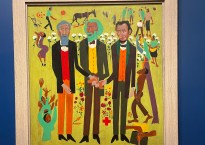
Fighters for Freedom

Robert H. Johnson’s ‘Three Great Abolitionists’ unites Abraham Lincoln, John Brown and Frederick Douglas in a hand-clasp that eluded these three leaders of the abolition of US slavery in their lifetimes. It is an arresting start to a rousing exhibition at the Smithsonian American Art Museum in Washington D.C. – all vibrant colours and stylised imagery in celebration of American freedom fighters, liberationists, emancipators, socialists, mostly people of colour.

Britta Marakatt-Labba’s Moving the Needle

Sami artist, Britta Marakatt-Labba, campaigns for environmental protection and indigenous rights in Norway through the medium of embroidered landscapes and maps of epic beauty and subtle detail. The two hours I spent viewing a large retrospective of her work – ‘Moving the Needle’ – at the Nasjonal Museet in Oslo last weekend counts as my most enjoyable 2 hours wait for a hotel check-in. Sometimes delay really does generate pleasure.

Dylan Thomas Centre, Swansea

Swansea’s Dylan Thomas Centre pays fitting homage to the unique talent of Wales’ greatest writer. While the exhibition space is modest in comparison to the depth of Thomas’ literary contribution, it is so wonderfully curated, with Thomas’ sonorous voice regaling visitors with excerpts of his poems, letters and plays at every turn, that a full afternoon was necessary for our visit.

Gazing on the cosmic plughole

I wonder if Brandon Yoshizawa knew that the exhaust plume of a Falcon 9 rocket would take on the shape of a flower as its hot discharge made contact with colder air of the upper atmosphere? He was certainly in the right place at the right time and with the requisite skill to capture an extraordinary image. The result, Flower Power, is a perfect example of the blend of art and science that makes the annual Astronomy Photographer of the Year exhibition at the Greenwich National Maritime Museum so special. 

London’s still calling forty years on

In a vital and captivating free new exhibition the Museum of London is celebrating forty-years since the release of London Calling by The Clash. It’s an album that is both precisely of its time and yet timeless, a spirit that the curators (working with the surviving members of the band) have managed to capture perfectly. Markontour has visited twice already in its first week and I’m sure I will be back a few more times before it closes in April.

Becoming the Forest

On the top floor of a Tudor hunting lodge at the edge of Epping Forest, something both strange and enlightening happened this weekend. “On All Hallows Eve, when the veil between the living and dead is at its thinnest” Becoming the Forest, and installation by Norwegian artist, Una Hamilton Helle, invited visitors to “take part in an audio journey celebrating the oncoming winter, populated by the voices of forest dwellers past and present, including the trees themselves.”

Colours of the hills and fields in Hamburg

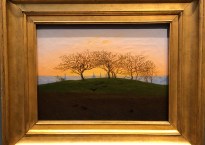
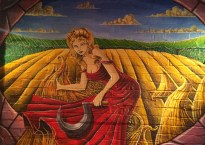
I have become a regular visitor to Hamburg this year, as it is a convenient stopping off point on the train journey from London through to Copenhagen, Stockholm and Oslo, where work takes me frequently. Usually I arrive late and leave early, but recently I discovered what I had been missing, after an early doors trip to the Hamburger Kuntshalle gallery. Most exciting were the landscapes of Caspar Friederich, an artist I had never previously encountered, but whose ‘Hill and Ploughed Field Near Dresden’ now lights up my soul every time I turn on my iPad.

Smoke and mirrors

I was briefly into performing magic as a kid, inspired by Paul Daniels on the telly if truth be told. A visit to the Wellcome Collection’s fascinating new exhibition, ‘Smoke and Mirrors – The Psychology of Magic’, has re-ignited my interest and reminded me just how malleable the human mind can be.

The Boy Who Harnessed The Wind

“Overcoming poverty is not an act of charity, it is an act of justice”, said Nelson Mandela, in a quote that closes ‘Mandela: The Official Exhibition” on London’s southbank. He went on to explain how poverty can be overcome: “Like slavery and apartheid, poverty is not natural, it is man-made and it can be eradicated by the actions of human beings”.

Big Pit

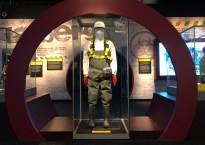
Over 300 million years have passed since coal seams were laid down in the valleys from where I write this blog, when Wales sat astride the Earth’s equator and plants ruled the planet. The Big Pit National Coal Museum’s focuses on the last two hundred of those years and the ferocious drive of homo sapiens to dig out and burn this bounty of the Carboniferous. It is a tale of exploitation and degradation, but also of pride and ingenuity.

Fatberg!

It feels slightly odd to be voluntarily spending a Saturday morning going to see the remnants of a 130 tonne, 250 metre long fatberg, but it is the Museum of London’s new star attraction and I fancied a bit of local tourism. 

The Great British Seaside

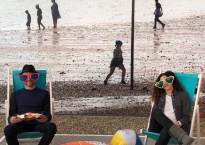
International readers of this blog may already be sneering at the concept of the ‘The Great British Seaside’, but as the Greenwich National Maritime Museum’s nostalgic exhibition shows, there’s plenty that’s wonderful and interesting about a British beach – it just rarely includes sunshine.

Songs for Pythagoras & Undaunted Women

Peter Von Tiesenhausen is an ecologically-minded artist, who salvages to create. His extraordinary ‘Relief’ – a mountain-scape sculpted from the clapperboards of an abandoned community hall – conveys beauty and sadness in equal quantities and is going to stay in my mind for a long time. As will the Art Gallery of Alberta’s retrospective exhibition ‘Undaunted: Canadian Women Painters of the 19th Century”. Who knew there was such a great gallery in Edmonton!

Tredegar House

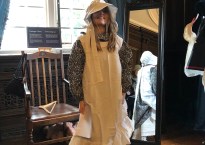
Tredegar House in Newport is where the National Trust are experimenting with allowing visitors to touch and feel history, rather than pointing from behind a rope. As it stands, I would wager that Tredegar House is the only place in Britain where in a single morning one can be tutored in the art of brushing up a top-hat, put on a shadow puppet show, study Elizabethan art, dress up as 1920’s housemaid, enjoy Elizabethan portraiture and sit down to dinner with a Russian princess.

Dropping in on Dr Johnson of Lichfield

I do love a good dictionary and Dr Johnson remains the master of the genre, three hundred years after he compiled his first such tome. This is why markontour and friends took a short detour to Lichfield on our long drive back to London from the English Lake District, for it was in this little Staffordshire city that Samuel Johnson was born in 1709 and his childhood home has be turned into a lovely museum and bookshop.

John Kemp Starley and the two wheeled revolution

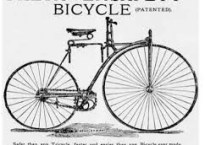
The ever-wonderful Vestry House Museum is currently showing a great little exhibition about the development of the modern bicycle and the Walthamstow man who invented it. As Walthamstow successfully experiments with mini-Hollands – neighbourhoods designed for pedestrians and cyclists – it’s fantastic to know that the bike itself has its roots in E17.

Artists and Empire

The best bit of the Tate Britain’s compelling ‘Artists and Empire’ exhibition comes right at the end, in the ‘Legacies of Empire’ room. Here, Hew Locke’s clever guerilla art sees him adorn a statue of Bristol’s founding father, Edward Colston, in cheap plastic gold trinkets, a modern equivalent of the tat that imperial traders exchanged for slaves. For, as Locke explains in an accompanying Restoration, Colston and Bristol’s wealth was built on human trafficking.

The Museum of Tomorrow

Sited on an archipelago in the port district of Rio de Janeiro, on approach the Museum of Tomorrow looks like some kind of spaceship, perhaps an inter-galactic freighter. Once inside and looking out, however, the feeling is of being in the belly of a whale, its huge skeletal frame exposed to the burning sun. It is an extraordinary structure housing a truly unique museum, that invites the visitor to ponder human existence in way that is progressively profound, disturbing, and uplifting.

West Africa: Word, Symbol, Song

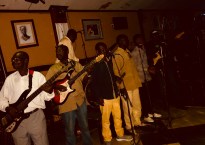
The British Library’s ‘West Africa: Word, Symbol, Song’ is an engrossing and rewarding introduction to this vast region of 340 million people, 1,000 languages and 17 nations. Despite loving the music of Fela Kuti, Toumani Diabate, and Ali Fark Toure, markontour had hitherto failed to understand the regional and cultural connections between these great artists. This exhibition shows how their West African homelands share a love of story-telling, of which these great artists are simply modern expressions.

Cromford – birthplace of the factory system

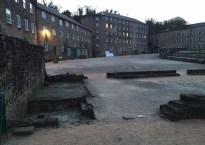
There are three good reasons to visit Cromford in Derbyshire. First, Richard Arkwright’s cotton mills on the edge of the hamlet were the birthplace of the factory system. Second, the nearby John Smedley shop, itself a survivor from the late eighteenth century, sells the finest woollen and cotton pullovers in the world. Third, the Scarthin bookshop boasts a cafe hidden behind a revolving bookshelf. Finally, my old history professor has edited a cracking volume of essays about Cromford’s role in the Industrial Revolution.

Cosmonauts

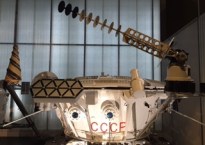
Despite having no aptitude for science, I have been fascinated by space travel and the stars since I was a teenager. So I had to borrow a friend’s son for an excuse to visit the Science Museum’s nostalgic tribute to the Soviet space programme – Cosmonauts.

Celts: art and identity

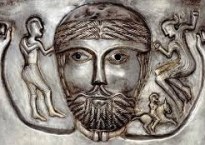
It turns out that the ancient Greeks coined the label Keltoi to categorise non-Mediterranean Europeans. Plato and his intellectual mates regarded the Keltoi as war-mad alcoholics with a penchant for fancy jewellery. But as the British Museum’s exhibition shows, the Celts were far from shallow. The Greeks might have corneed the early market in naturalistic art, but the Celts were already well into abstractionism 2,500 years ago.

The Golden Valley

I have been visiting the Golden Valley, a sliver of countryside beauty astride the Welsh/English border, for over twenty five years, mostly to stay at the beautiful parental home of one of my closest friends. It has become one of my favourite places on Earth and so I am breaking the markontour mould of departure lounge ramblings to send this despatch from the relaxed idyll of Vowchurch in Herefordshire.