Departure lounge ramblings on music, places, climate change and stuff outdoors

Posts from the ‘Nature’ category

Nature

Fast and Furious – the Gwalchglas

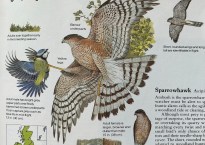
In his rousing book, Raptors, James Macdonald Lockhart describes the moment an unremarkable afternoon walk transformed into a never-to-be-forgotten moment: “Rising out of the bramble thicket beside a gate was a female Sparrowhawk. Wings spread, tail open in a fan as she rose..appearing as if from nowhere and then [she] was gone.” For Macdonald Lockhart, Sparrowhawks “operate in a different dimension to other birds of prey”. Having last week experienced an almost identical encounter with the lightning-fast aerial hunter that the Welsh call ‘Gwlchglas’, I know what he means.
Brown bear country

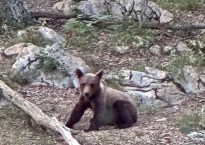
Slovenia, where markontour was holidaying recently, has the distinction of being both one of the most materially equal societies in the world (a 2nd placed Gini coefficient of 0.24, which is incidentally the same score Britain enjoyed in 1979 prior to Thatcherism. The UK’s score of 0.34 now puts us outside the top 40), but also has enshrined the rights of nature in its constitution. The result is a country that is visibly thriving (although I am sure there are a thousand problems not visible to the casual tourists’ eye) and brimming with biodiversity.

A little bit of bread and no cheese

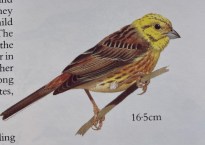
We know spring is imminent where I live in the Bannau Brycheiniog not just from the growing warmth of the sun throughout the day, but because of the return of the familiar, high-pitched refrain of “a little bit of bread and no cheese’ whistling around the hills. It is, of course, the call of the Yellowhammer – Melyn yr Eithin in Welsh – and it’s a song to brighten any day.

Bees: A Story of Survival

I’m probably kidding myself, but I like to think I know a little bit about the birds after 5 years escaping to the Welsh countryside, but an uplifting visit to the Liverpool World Museum revealed that I didn’t even know what I didn’t know about the bees. Fortunately, from the fact that these industrious little creatures have survived since the time of the dinosaurs, to the highly endearing knowledge that they have a honey stomach, “Bees: A Story of Survival” had the answers. Sadly, unlike the Bass Museum of Brewing History (now much missed), where you used to get beer tokens to round off your visit, there was no honey at the end of the exhibition, but in all other ways it was a fact-filled, sweet delight.

Murmuration over Llyn Syfaddan

Last weekend I stood mouth agape on the shore of Llyn Syfaddan gazing in wonder at one of nature’s greatest glories – a vast murmuration of birds. Flying in east to west over the space of an hour tens of thousands of starlings wheeled and reeled towards their winter home, pulsating like a single living organism stretching across an arms-length of sky and then, as one, dived to roost in the reed beds that line Lake Llangorse’s shore. It was simply breathtaking and to paraphrase Robert Smith in ‘A Forest’, which I have heard on repeat this week (thank Radio 6 Music), I want to see them do it again, and again, and again, and again.

Panda research base

Everyone knows the panda from the multitude of iconic images that this loveable-looking bear has inspired around the world. But surely there is nowhere where the panda’s image can be more ubiquitous than in Chengdu, an enormous city of 21 million residents in south-western China and home to the Chengdu Research Base of Giant Panda Breeding, which I was privileged to visit this week.

It’s all about Siff-Siaff

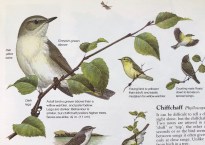
It’s all about Chiffchaff (Siff-Siaff in Welsh) in my little corner of the Bannau Brycheiniog (Brecon Beacons national park) at the moment. Their noisy onomatopoeiac chiff-chaff call dominates the hedgerow airwaves, relegating the robins and blackbirds that have kept singing all winter to the sidelines. This is as it should be, Siff-Siaff is one of the first migrants to arrive back in Britain and start singing and is, thus, a reliable indicator that spring is really here.

The thorn bush is the mother of the oak

Ms Markontour and I have been enjoying a blissful bank holiday weekend at Knepp Wildland Safari in southern England. We’ve been wanting to visit since reading Isabella Tree’s ‘Wilding’ a few years ago – an account of how she and her husband, Charlie Burrell, decided to see what happened if nature was permitted to manage itself on their 3,000 acre loss-making farm. The result is the most exhilarating nature site in Britain. A place that echoes all day and night to bird-song, has welcomed back multiple species that were on the brink of extinction in Britain from the Turtle Dove to the Nightingale, and where bramble and scrub have proven to be the catalyst for abundance, variety and beauty, rather than a nuisance to be cleared away. I could have happily stayed forever.

Merlin

Cycling down a wooded cut through to Groesffordd yesterday we disturbed a sleek, grey raptor, who wheeled suddenly in front of us and then swept up the path at high speed, flying just inches above the ground. It was a breathtaking display and with such characteristics could only have been one bird – the usually elusive Merlin​.

The Cranes Return

Cranes, large white wetland birds, standing 1.3 metres tall with flamboyant tail-feathers that bob about as they graze, were hunted to extinction in Britain four hundred years ago. But last weekend we went to visit a now thriving resident population at the Slimbridge Wetland Centre on the Severn Estuary near Bristol. It was a magical and uplifting experience, and it turned out that the Cranes shared the billing with an astonishing cast of other beautiful wildfowl.

A fizzing atom, bombarding the sky

I bought Raptor: A Journey Through Birds by James Macdonald Lockhart because spending a pandemic year in Wales has afforded the privilege of seeing birds of prey on a daily basis, and I wanted to learn my hawks from my falcons. Raptor has certainly helped with that, but much more besides, with Lockhart’s lyrical descriptions of avian behaviour making my own experience of seeing raptors in the wild even more magical.

Landmarks

Robert Macfarlane is the nature writer of choice in markontour’s household, and so reading Landmarks, Macfarlane’s linguistic exploration of landscape, has been a deliberately drawn out affair – a book that we have read out loud over several months in order to savour every word.

Starting to know redstarts

I didn’t know a redstart from a robin a year ago, but thanks to lockdown I’ve been getting to know a pair of them that have taken residence half way up the bridleway at the back of our house. The size of robin but with longer wings and tail, and with a similarly arresting, but slightly more rusty, splash of red on their breast, the male redstart also sports a white crown, black throat and boisterous, insistent call. One might call them noisy neighbours, but I have loved having them nearby.

A cloud of unidentified leafish objects

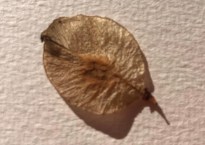
Hearing unforecasted rain hitting the tarmac the other evening, I ventured outside anyway, having been looking forward to a nightwalk. Beyond the sound-proofing of the door the noise was cacophanous and I almost retreated back inside. But, belatedly, I noted the absence of moisture in the air and, slowly, realised that what I had assumed to be the patter of raindrops was in fact the flutter of a thousand leaves being blown up the drive. Venturing further out, I spent a pleasant but futile few minutes trying to catch some, before settling for scooping up a handful from the floor. They were unlike any leaf I had ever seen and it has taken me a week of stolen minutes with the markontour “library” to derive their origin, such is my city-boy lack of basic wildlife knowledge. But it has been fun learning and, in the end, it turned out that buried deep in my brain was my Mum introducing me to the parent-tree as a boy.

In celebration of cuckoos – Britain’s naughtiest bird

Our neighbourhood cuckoo returned on 16 April and has been rewarding us with his song ever since, which reminded me of a blog post Ms Markontour wrote last year about Britain’s naughtiest bird which I never got around to publishing. One of the upsides of lockdown is having time to be in one place and appreciate the changing of the seasons, so it was lovely to read this again today and I hope you enjoy it too.

The Housemartins reform

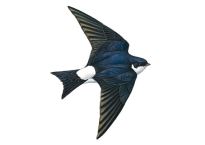
Yesterday at Ty Cerrig we celebrated the return of the House martins. Not the reforming of Hull’s finest indie band, but the arrival of the little blue-backed, white-fronted birds that live in our eaves from spring to late summer.

Isolation playlist #2

As we enter a third week of lock-down in Britain, markontour’s isolation playlist is growing nicely, now topped up by some wonderful on-line live sessions, Jarvis dj-ing from his living room, and the daily pleasure of Chris Packham and Megan McCubbin’s ‘Nature Livestreams’. The whole playlist is available here.

Why is the skylark shouting?

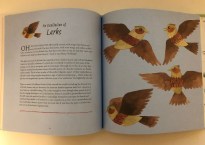
We’re doing a daily bird-watching hour as part of our family coronavirus WhatsApp group. Obviously there’s quite a big risk of repetition of sightings of sparrows, or the Groundhog Day magpie who learns anew each morning that it can’t hang onto the fat ball feeder long enough to get a bite in, so I was dead pleased yesterday to see a lark rising vertically up into the blue sky from the moorlands on the ascent of Tor y Foel (social distancing of at least 200m from the four other people I saw also out for a bit of exercise).

Becoming the Forest

On the top floor of a Tudor hunting lodge at the edge of Epping Forest, something both strange and enlightening happened this weekend. “On All Hallows Eve, when the veil between the living and dead is at its thinnest” Becoming the Forest, and installation by Norwegian artist, Una Hamilton Helle, invited visitors to “take part in an audio journey celebrating the oncoming winter, populated by the voices of forest dwellers past and present, including the trees themselves.”

Green-robed senators of mighty woods

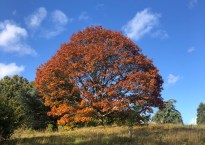
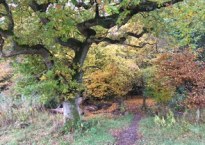
This week has been all about oaks, Keats’ “green-robed senators of mighty woods”. In Richard Powers’ extraordinary novel, ‘The Overstory’, the collaborative endurance of the quercus genus is counterposed to the transient destruction of homo sapiens. I had been eking the book so that I could finish it on holiday surrounded by trees, rather than tower blocks, and so yesterday I allowed myself to turn the last page after a wonderful autumnal stroll around the Glanusk Estate in the Brecon Beacons, made all the more magical by being able to enjoy it with my parents.

Krankenhaus in Muncaster

This weekend’s British Sea Power curated Krankenhaus festival on the Cumbrian coast has been pure joy. Housed in a barn on the Muncaster Castle estate, it felt like a legal rave curated by a nature-loving art-school band. Where else would you get hear everything from folk to tree-people trance, alongside a reading from the poet laureate, late night DJ-ing from a snooker legend, and musically enhanced bingo from Japanese punk band?

Hedgerows – a natural history

Today a rare treat – a guest blog from Ms Markontour, reviewing ‘A natural history of the hedgerow and ditches, dykes and dry stone walls’, by John Wright: When I think of hedgerows I think of nature, green leaves, fragrant May blossom and noisy, busy birds. John Wright puts the hedgerow in historical context starting with pre-history which turns out to be fascinating. Piecing together archaeological and ancient written records, he walks us through time from the last ice age 10,000 years ago.

Brian Cox’s Universe

Professor Brian Cox told us all about the universe in Nottingham last night. It wasn’t a lecture because we were drinking cosmic beer and no-one fell asleep, but an awful lot of information poured out in fast-flowing Mancunian, devoid of pauses and punctuated by lots of smiles. At one point half way through I thought I understood Einstein’s General Theory of Relativity. But this morning I realise that with every passing second more of that knowledge is slipping away into the space-time continuum and so I need to get this blog down fast.

A wren in the bush

This afternoon we were captivated by a little Wren, busying itself in the undergrowth of a hedge that lines the bridleway from the Welsh Venison Centre (we prefer to think of it as The Deer Sanctuary) to Tal-y-bryn. We had stopped to listen to a Robin singing his heart out / fiercely claiming his territory, but the noisy harrumphing of the Wren drew our attention away. These tiny birds are barely the size of a child’s hand but make a real racket. Indeed, my twitcher app tells me in a Top Trumps sort of way that “weight for weight the Wren’s song is ten times louder than a crowing cockerel”.

Today I awoke to a frost hollow

Earlier this week I awoke to see a field of lost clouds, a huge bank of them, gently swirling in the valley beyond our front window, separated from their brethren who were floating in their rightful places in the sky above the Welsh hills.

Kingfishers – making the everyday sparkle

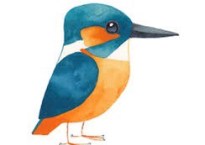
Yesterday markontour and the crew of the Burton Library Astronomical Survey Team (Marine Division) enjoyed the rare pleasure of following two kingfishers in succession, their electric colours lighting up the afternoon as they bobbed and weaved their way along the banks of the Trent and Mersey canal. Earlier my Dad and I had been going through a box of my sixth form poetry essays in a vain attempt to clear space in my parent’s loft (all that got ditched were a few surplus copies of ‘Funding London Underground’ – a campaign publication I had worked on in the late 1990s). Thus inspired, I spent the afternoon, when not at the tiller, trying to find a poem about my favourite bird.

H is for Hawk

‘H is for Hawk’ won many “Best Non-Fiction” garlands last year and so there are no shortages of reviews, yet it is just so good that markontour would not be complete without adding to the eulogies. I have never had an interest in falconry, or any desire to train a wild animal of any kind, but ultimately ‘H is for Hawk’ simply made me want to be outside and enjoying our wonderful planet while it is still a place of extraordinary diversity and beauty.

Buenos Aires

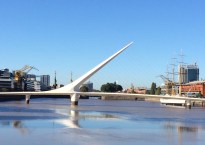
Buenos Aires is beautiful city of green spaces and white, colonial buildings and, while I can only draw on a couple of days worth of evidence, it is clearly a place to have fun. Here follows the initial markontour guide, hopefully to be substantially updated at some point: