Departure lounge ramblings on music, places, climate change and stuff outdoors

Posts from the ‘Places’ category

Cities and the interesting places within them

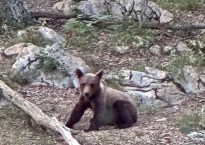
Brown bear country

Slovenia, where markontour was holidaying recently, has the distinction of being both one of the most materially equal societies in the world (a 2nd placed Gini coefficient of 0.24, which is incidentally the same score Britain enjoyed in 1979 prior to Thatcherism. The UK’s score of 0.34 now puts us outside the top 40), but also has enshrined the rights of nature in its constitution. The result is a country that is visibly thriving (although I am sure there are a thousand problems not visible to the casual tourists’ eye) and brimming with biodiversity.

Bees: A Story of Survival

I’m probably kidding myself, but I like to think I know a little bit about the birds after 5 years escaping to the Welsh countryside, but an uplifting visit to the Liverpool World Museum revealed that I didn’t even know what I didn’t know about the bees. Fortunately, from the fact that these industrious little creatures have survived since the time of the dinosaurs, to the highly endearing knowledge that they have a honey stomach, “Bees: A Story of Survival” had the answers. Sadly, unlike the Bass Museum of Brewing History (now much missed), where you used to get beer tokens to round off your visit, there was no honey at the end of the exhibition, but in all other ways it was a fact-filled, sweet delight.

Panda research base

Everyone knows the panda from the multitude of iconic images that this loveable-looking bear has inspired around the world. But surely there is nowhere where the panda’s image can be more ubiquitous than in Chengdu, an enormous city of 21 million residents in south-western China and home to the Chengdu Research Base of Giant Panda Breeding, which I was privileged to visit this week.

Fighters for Freedom

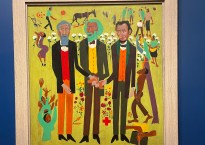
Robert H. Johnson’s ‘Three Great Abolitionists’ unites Abraham Lincoln, John Brown and Frederick Douglas in a hand-clasp that eluded these three leaders of the abolition of US slavery in their lifetimes. It is an arresting start to a rousing exhibition at the Smithsonian American Art Museum in Washington D.C. – all vibrant colours and stylised imagery in celebration of American freedom fighters, liberationists, emancipators, socialists, mostly people of colour.

Hu Gadarn’s plough

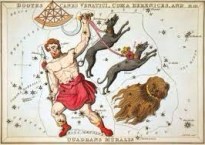
The changing of the seasons on earth also marks a shift in the ascendancy in the skies, with Bootes taking over from Orion as the most prominent constellation in the heavens. In Welsh mythology, Bootes represents Hu Gadarn, the first farmer to use oxen to pull a plough. The moment at which Hu Gadarn, his yoke (the Roman constellation of Auriga), and ox (Taurus, the bull) first line up after sunset was a reminder to ancient Celts that it was time to plough the fields and sow seeds.

Britta Marakatt-Labba’s Moving the Needle

Sami artist, Britta Marakatt-Labba, campaigns for environmental protection and indigenous rights in Norway through the medium of embroidered landscapes and maps of epic beauty and subtle detail. The two hours I spent viewing a large retrospective of her work – ‘Moving the Needle’ – at the Nasjonal Museet in Oslo last weekend counts as my most enjoyable 2 hours wait for a hotel check-in. Sometimes delay really does generate pleasure.

The Pennal Letter

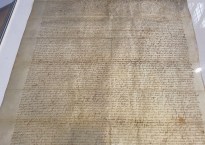
The inspiration for today’s blog is ‘The Pennal Letter’ – a double-A3 sized piece of parchment, penned in Latin in March 1406 by Welsh hero, Owain Glyndwr, and addressed to Charles VI, King of France. Last weekend I spent a thoroughly enjoyable afternoon viewing a replica of the manuscript in the Canolfan Owain Glyndwr, and then following a trail around Machyllneth and beyond which charts the 10 year period when Glyndwr threw off English colonial shackles and briefly established Wales as an independent nation. (Nb there is an accompanying podcast for this blog).

Federico Garcia Lorca and the duende

Despite part-inspiring one of my favourite Clash songs, ‘Spanish Bombs’, until visiting Andulucia this summer I knew nothing about the legendary Spanish poet and playwright, Federica Garcia Lorca, other than the intriguing reference in Joe Strummer’s lyric: “Oh please leave the ventana open / Federico Garcia Lorca is dead and gone”. Today in the small tourist village of Pampaneira, a dense huddle of whitewashed stone houses cramped onto impossibly steep terraces on the southern edge of an escarpment of the Sierra Nevada, I was intrigued again by Lorca – this time generating enough impetus to read up a bit.

Barcelona

This is going to need some fleshing out on subsequent visits, but getting back to the original roots of markontour.com, here are fragmentary reflections on Barcleona, from three days working there and one day of leisure.

The thorn bush is the mother of the oak

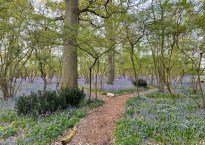
Ms Markontour and I have been enjoying a blissful bank holiday weekend at Knepp Wildland Safari in southern England. We’ve been wanting to visit since reading Isabella Tree’s ‘Wilding’ a few years ago – an account of how she and her husband, Charlie Burrell, decided to see what happened if nature was permitted to manage itself on their 3,000 acre loss-making farm. The result is the most exhilarating nature site in Britain. A place that echoes all day and night to bird-song, has welcomed back multiple species that were on the brink of extinction in Britain from the Turtle Dove to the Nightingale, and where bramble and scrub have proven to be the catalyst for abundance, variety and beauty, rather than a nuisance to be cleared away. I could have happily stayed forever.