There will be fun
One of my many short-lived obsessions as a boy was with magic. Not the black arts kind, but the Three Card Trick variety. Apparently my nieces…

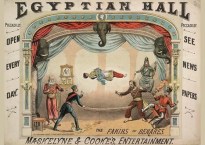
One of my many short-lived obsessions as a boy was with magic. Not the black arts kind, but the Three Card Trick variety. Apparently my nieces…
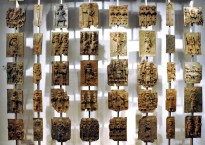
Eugene Skeef and the Abantu Ensemble started an extraordinary performance at the British Museum last night with the sound of bird song. Not sampled sparrows, but…

After months of nearly no blogging activity it felt wrong to get going again with a piece about the joy of being in my favourite pub…

The best bit of the Tate Britain’s compelling ‘Artists and Empire’ exhibition comes right at the end, in the ‘Legacies of Empire’ room. Here, Hew Locke’s clever guerilla art sees him adorn a statue of Bristol’s founding father, Edward Colston, in cheap plastic gold trinkets, a modern equivalent of the tat that imperial traders exchanged for slaves. For, as Locke explains in an accompanying Restoration, Colston and Bristol’s wealth was built on human trafficking.

Sited on an archipelago in the port district of Rio de Janeiro, on approach the Museum of Tomorrow looks like some kind of spaceship, perhaps an inter-galactic freighter. Once inside and looking out, however, the feeling is of being in the belly of a whale, its huge skeletal frame exposed to the burning sun. It is an extraordinary structure housing a truly unique museum, that invites the visitor to ponder human existence in way that is progressively profound, disturbing, and uplifting.

The British Library’s ‘West Africa: Word, Symbol, Song’ is an engrossing and rewarding introduction to this vast region of 340 million people, 1,000 languages and 17 nations. Despite loving the music of Fela Kuti, Toumani Diabate, and Ali Fark Toure, markontour had hitherto failed to understand the regional and cultural connections between these great artists. This exhibition shows how their West African homelands share a love of story-telling, of which these great artists are simply modern expressions.
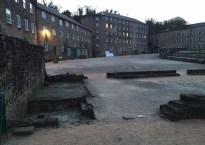
There are three good reasons to visit Cromford in Derbyshire. First, Richard Arkwright’s cotton mills on the edge of the hamlet were the birthplace of the factory system. Second, the nearby John Smedley shop, itself a survivor from the late eighteenth century, sells the finest woollen and cotton pullovers in the world. Third, the Scarthin bookshop boasts a cafe hidden behind a revolving bookshelf. Finally, my old history professor has edited a cracking volume of essays about Cromford’s role in the Industrial Revolution.
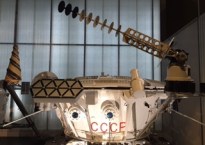
Despite having no aptitude for science, I have been fascinated by space travel and the stars since I was a teenager. So I had to borrow a friend’s son for an excuse to visit the Science Museum’s nostalgic tribute to the Soviet space programme – Cosmonauts.

While the gentrification of Walthamstow Village continues apace with the addition of a wine bar (I’m not complaining), it was nice last weekend to be able to enjoy one of E17’s long-lasting attractions, the Vestry House Museum.
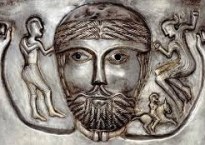
It turns out that the ancient Greeks coined the label Keltoi to categorise non-Mediterranean Europeans. Plato and his intellectual mates regarded the Keltoi as war-mad alcoholics with a penchant for fancy jewellery. But as the British Museum’s exhibition shows, the Celts were far from shallow. The Greeks might have corneed the early market in naturalistic art, but the Celts were already well into abstractionism 2,500 years ago.
 markontour