Margate – where the seawater cures all ills
Until a few weeks ago the only other things I knew about Margate was that it was where J.M. Turner painted many of his greatest seascapes…

Cities and the interesting places within them

Until a few weeks ago the only other things I knew about Margate was that it was where J.M. Turner painted many of his greatest seascapes…
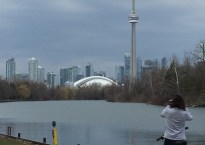
Toronto is one of my favourite cities, with its beautiful lake, vibrant music scene, laid-back attitude (for a big city) and ultra-friendly people. I visited four or…
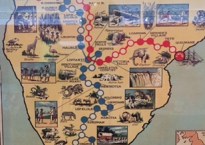
As far as markontour was concerned, board games started in about 1976 with an animal-based memory card game. But, having been educated by the Museum of…
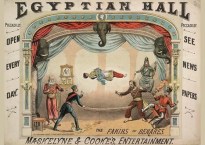
One of my many short-lived obsessions as a boy was with magic. Not the black arts kind, but the Three Card Trick variety. Apparently my nieces…
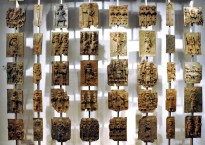
Eugene Skeef and the Abantu Ensemble started an extraordinary performance at the British Museum last night with the sound of bird song. Not sampled sparrows, but…

For the last three years I enjoyed the luxury of being required by reasons of my employment to visit Rio de Janeiro on a regular basis.…
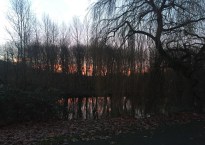
Meadowside Leisure didn’t open as scheduled today, so no swim, but I did get to enjoy a beautiful Burton sunrise instead. Nice to be home &…

After months of nearly no blogging activity it felt wrong to get going again with a piece about the joy of being in my favourite pub…
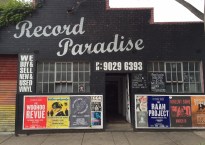
Melbourne is a music town and thus makes markontour feel very much at home. In particular, I love Brunswick, Melbourne’s Dalston/Greenpoint; I love its vibrant community radio; I love the free tramway service in the centre of town; I was surprised to find Theakston’s Old Peculiar costs $16 a pint. Most of all I love the chance to catch up with old friends from Nottingham days and that’s probably why there’s an even higher than usual markontour quota of references to bars and record shops in this very incomplete city guide!

The best bit of the Tate Britain’s compelling ‘Artists and Empire’ exhibition comes right at the end, in the ‘Legacies of Empire’ room. Here, Hew Locke’s clever guerilla art sees him adorn a statue of Bristol’s founding father, Edward Colston, in cheap plastic gold trinkets, a modern equivalent of the tat that imperial traders exchanged for slaves. For, as Locke explains in an accompanying Restoration, Colston and Bristol’s wealth was built on human trafficking.
 markontour