To Provide All People
If anyone has yet to see ‘To Provide All People’, Owen Sheers’ incredible ‘poem in the voice of the NHS’, dramatised by the BBC, then you are missing out on the television event of the year.
Over 300 million years have passed since coal seams were laid down in the valleys from where I write this blog, when Wales sat astride the Earth’s equator and plants ruled the planet. The Big Pit National Coal Museum’s focuses on the last two hundred of those years and the ferocious drive of homo sapiens to dig out and burn this bounty of the Carboniferous. It is a tale of exploitation and degradation, but also of pride and ingenuity.
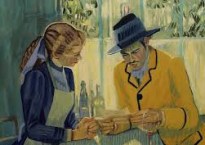
‘Loving Vincent’ is stunning animated oil painting, with every scene lovingly reproduced in the style of its subject and featuring many of the characters from Van Gogh’s greatest works. It is like the artist had painted his own life story, except had this been an autobiography one suspects that the subject would not have been treated so sympathetically. For Vincent, we learn, inspired much love, but never quite enough to overcome his own lack of self-worth.
It was probably the post-wedding hangover, but while I struggled with the room of abstracts, everything else about the Oxford Ashmolean gallery’s ‘American Modernism’ exhibition was pure joy.
Seven days after seeing The National I still have ‘Vanderlyle Crybaby Geeks’ on repeat in my head. London does a nice line in chilled-out summer festivals these days and last Saturday The National were the perfect headliners in Victoria Park, somehow invoking audience euphoria from a set-list that veritably wallowed in melancholy. The previous night I had enjoyed a different kind up uplift in Brixton, with Loyle Carner singing about his mum again and Erykah Badu suitably eccentric in a stetson.
Standing tall and bereft on an escarpment near Llangattock, the Lonely Shepherd has endured many centuries of regret. Below his spike of limestone, fields fed by Welsh rain sparkle in the post-thunderstorm sunshine, their emerald splendour liberally flecked with pure white Hawthorn blossom. It’s not a bad place to face an eternity of penance, nor indeed to pause midway on a May bank-holiday walk.
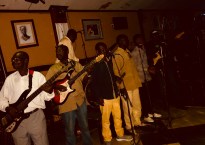
If you ever find yourself near a barbershop in Dar es Salaam late at night and you hear music, follow the sound. You won’t be disappointed.
This isn’t really a blog, more of a link to Bill Drummond’s hilarious new work ‘Another Side of Bob Dylan – Part Two’, courtesy of the ever-wonderful Caught By The River website. I don’t want to spoil a word, but it involves a former Timelord explaining why he has been waiting for Bob Dylan for thirty-five years, with the proposition that “he should quit his Great American Song Book shit that he has been doing, and hit the road with me, and that we should – over a period of time – go to all the places in the British Isles where nine different languages were spoken 200 years ago, and find a song from each of those places, and then he should record them and I will produce it.” It’s pure genius and has enlivened what should have been a dull three hour stop-over in Joburg airport. Follow the link and enjoy!
Mariam is tarred from birth as a ‘harami’, an illegitimate daughter of a rich, weak man. She lives a life of pain and loss, in which she grows to believe that no-one cares for her, except the mother whose love she couldn’t properly comprehend as a child. Yet Mariam will live forever in Laila’s heart “where she shines with the bursting radiance of a thousands suns”. So goes the poignant, lyrical story of Khaled Hosseini’s second novel, and what an engrossing, and ultimately uplifting, tale it is.
Yesterdsay Ms Markontour and I caused a tail-back on the route down Mynydd Llangyndir, bringing our bikes to a halt in the middle of the road to stand awestruck as a majestic Red Kite circled directly overhead. It was a great display, but it turns out that the kite’s desire to check out all and any movement on the ground was almost its undoing. These massive birds, with their black and white wings and unmistakable orange/red breasts made themselves easy prey for farmers armed with guns, and there was only one breeding female left in Britain in my lifetime.