Departure lounge ramblings on music, places, climate change and stuff outdoors

Posts from the ‘Nature’ category

Nature

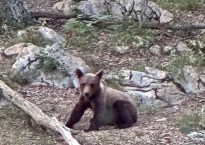
Brown bear country

Slovenia, where markontour was holidaying recently, has the distinction of being both one of the most materially equal societies in the world (a 2nd placed Gini coefficient of 0.24, which is incidentally the same score Britain enjoyed in 1979 prior to Thatcherism. The UK’s score of 0.34 now puts us outside the top 40), but also has enshrined the rights of nature in its constitution. The result is a country that is visibly thriving (although I am sure there are a thousand problems not visible to the casual tourists’ eye) and brimming with biodiversity.

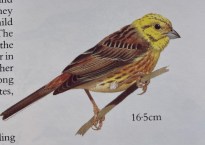
A little bit of bread and no cheese

We know spring is imminent where I live in the Bannau Brycheiniog not just from the growing warmth of the sun throughout the day, but because of the return of the familiar, high-pitched refrain of “a little bit of bread and no cheese’ whistling around the hills. It is, of course, the call of the Yellowhammer – Melyn yr Eithin in Welsh – and it’s a song to brighten any day.

Bees: A Story of Survival

I’m probably kidding myself, but I like to think I know a little bit about the birds after 5 years escaping to the Welsh countryside, but an uplifting visit to the Liverpool World Museum revealed that I didn’t even know what I didn’t know about the bees. Fortunately, from the fact that these industrious little creatures have survived since the time of the dinosaurs, to the highly endearing knowledge that they have a honey stomach, “Bees: A Story of Survival” had the answers. Sadly, unlike the Bass Museum of Brewing History (now much missed), where you used to get beer tokens to round off your visit, there was no honey at the end of the exhibition, but in all other ways it was a fact-filled, sweet delight.

Murmuration over Llyn Syfaddan

Last weekend I stood mouth agape on the shore of Llyn Syfaddan gazing in wonder at one of nature’s greatest glories – a vast murmuration of birds. Flying in east to west over the space of an hour tens of thousands of starlings wheeled and reeled towards their winter home, pulsating like a single living organism stretching across an arms-length of sky and then, as one, dived to roost in the reed beds that line Lake Llangorse’s shore. It was simply breathtaking and to paraphrase Robert Smith in ‘A Forest’, which I have heard on repeat this week (thank Radio 6 Music), I want to see them do it again, and again, and again, and again.

Panda research base

Everyone knows the panda from the multitude of iconic images that this loveable-looking bear has inspired around the world. But surely there is nowhere where the panda’s image can be more ubiquitous than in Chengdu, an enormous city of 21 million residents in south-western China and home to the Chengdu Research Base of Giant Panda Breeding, which I was privileged to visit this week.

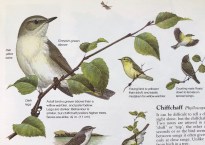
It’s all about Siff-Siaff

It’s all about Chiffchaff (Siff-Siaff in Welsh) in my little corner of the Bannau Brycheiniog (Brecon Beacons national park) at the moment. Their noisy onomatopoeiac chiff-chaff call dominates the hedgerow airwaves, relegating the robins and blackbirds that have kept singing all winter to the sidelines. This is as it should be, Siff-Siaff is one of the first migrants to arrive back in Britain and start singing and is, thus, a reliable indicator that spring is really here.

The thorn bush is the mother of the oak

Ms Markontour and I have been enjoying a blissful bank holiday weekend at Knepp Wildland Safari in southern England. We’ve been wanting to visit since reading Isabella Tree’s ‘Wilding’ a few years ago – an account of how she and her husband, Charlie Burrell, decided to see what happened if nature was permitted to manage itself on their 3,000 acre loss-making farm. The result is the most exhilarating nature site in Britain. A place that echoes all day and night to bird-song, has welcomed back multiple species that were on the brink of extinction in Britain from the Turtle Dove to the Nightingale, and where bramble and scrub have proven to be the catalyst for abundance, variety and beauty, rather than a nuisance to be cleared away. I could have happily stayed forever.

Merlin

Cycling down a wooded cut through to Groesffordd yesterday we disturbed a sleek, grey raptor, who wheeled suddenly in front of us and then swept up the path at high speed, flying just inches above the ground. It was a breathtaking display and with such characteristics could only have been one bird – the usually elusive Merlin​.

The Cranes Return

Cranes, large white wetland birds, standing 1.3 metres tall with flamboyant tail-feathers that bob about as they graze, were hunted to extinction in Britain four hundred years ago. But last weekend we went to visit a now thriving resident population at the Slimbridge Wetland Centre on the Severn Estuary near Bristol. It was a magical and uplifting experience, and it turned out that the Cranes shared the billing with an astonishing cast of other beautiful wildfowl.

A fizzing atom, bombarding the sky

I bought Raptor: A Journey Through Birds by James Macdonald Lockhart because spending a pandemic year in Wales has afforded the privilege of seeing birds of prey on a daily basis, and I wanted to learn my hawks from my falcons. Raptor has certainly helped with that, but much more besides, with Lockhart’s lyrical descriptions of avian behaviour making my own experience of seeing raptors in the wild even more magical.