Departure lounge ramblings on music, places, climate change and stuff outdoors

Green Man 2024

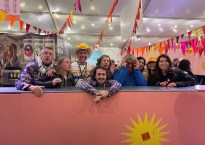
Given tickets for Green Man sold out in 2 hours for this year’s event, I am hesitant about adding to the growing list of rave reviews for this carnival of music, comedy, crafts and beer that consistently delivers the best vibes of the British festival scene. But Green Man 2024 was SO good.

Glastonbury 2024

I used to do an annual review of the world’s greatest musical festival with gig ratings and everything, but reading through this year’s blog I realise it has become more of a diary to remind me why I enjoyed my Glastonbury week so much. In any case, here follows markontour’s Glastonbury experience 2024.

Fighters for Freedom

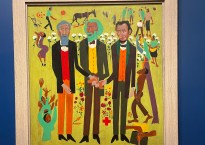
Robert H. Johnson’s ‘Three Great Abolitionists’ unites Abraham Lincoln, John Brown and Frederick Douglas in a hand-clasp that eluded these three leaders of the abolition of US slavery in their lifetimes. It is an arresting start to a rousing exhibition at the Smithsonian American Art Museum in Washington D.C. – all vibrant colours and stylised imagery in celebration of American freedom fighters, liberationists, emancipators, socialists, mostly people of colour.

It’s all about Siff-Siaff

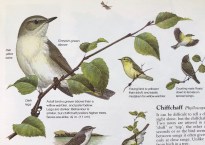
It’s all about Chiffchaff (Siff-Siaff in Welsh) in my little corner of the Bannau Brycheiniog (Brecon Beacons national park) at the moment. Their noisy onomatopoeiac chiff-chaff call dominates the hedgerow airwaves, relegating the robins and blackbirds that have kept singing all winter to the sidelines. This is as it should be, Siff-Siaff is one of the first migrants to arrive back in Britain and start singing and is, thus, a reliable indicator that spring is really here.

Hu Gadarn’s plough

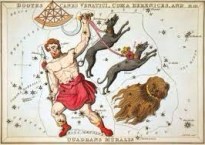
The changing of the seasons on earth also marks a shift in the ascendancy in the skies, with Bootes taking over from Orion as the most prominent constellation in the heavens. In Welsh mythology, Bootes represents Hu Gadarn, the first farmer to use oxen to pull a plough. The moment at which Hu Gadarn, his yoke (the Roman constellation of Auriga), and ox (Taurus, the bull) first line up after sunset was a reminder to ancient Celts that it was time to plough the fields and sow seeds.

Britta Marakatt-Labba’s Moving the Needle

Sami artist, Britta Marakatt-Labba, campaigns for environmental protection and indigenous rights in Norway through the medium of embroidered landscapes and maps of epic beauty and subtle detail. The two hours I spent viewing a large retrospective of her work – ‘Moving the Needle’ – at the Nasjonal Museet in Oslo last weekend counts as my most enjoyable 2 hours wait for a hotel check-in. Sometimes delay really does generate pleasure.

Hotel Lux at the Molotov

I lucked-out last night travelling back by train from Stockholm to London by way of Hamburg – getting to see Portsmouth band, Hotel Lux, at the Molotov Musikbar on the Reeperbahn.

The Pennal Letter

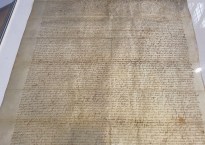
The inspiration for today’s blog is ‘The Pennal Letter’ – a double-A3 sized piece of parchment, penned in Latin in March 1406 by Welsh hero, Owain Glyndwr, and addressed to Charles VI, King of France. Last weekend I spent a thoroughly enjoyable afternoon viewing a replica of the manuscript in the Canolfan Owain Glyndwr, and then following a trail around Machyllneth and beyond which charts the 10 year period when Glyndwr threw off English colonial shackles and briefly established Wales as an independent nation. (Nb there is an accompanying podcast for this blog).

Do You Like Rock Music?

I had the privilege of seeing my favourite band, Sea Power, twice this week. First in Bristol’s Trinity community arts centre and then, closer to home, at the Islington Assembly Halls. There were no moshing polar bears on this occasion, but everything else was as it ought to be: lyrics welcoming Eastern European migrants (“Are you of legal drinking age? On minimum wage? Well welcome in”), a stage full of trees, stirring instrumentals of pounding drums, jangling guitars, hypnotic violin and rousing brass, celebration of the night’s sky, and an open-armed salutation from the stage that had everyone in their dedicated fanbase smiling all evening.

The Lost Rainforests of Britain

In the winter months I look for lichen. That habit, which I started because my binoculars are made temporarily redundant by reduced bird numbers on the uplands of the Bannau Brycheiniog during January, has developed new purpose since reading Guy Shrubsole’s magnificent ‘The Lost Rainforests of Britain’. Now I understand that the abundant varieties of these plant/fungi collaborations across the Welsh hills are not just distraction from the absence of something more exciting, but something incredible and historic in their own right – evidence of the last remaining fragments of the temperatre rainfrorests which once covered these isles.